
Weird Things About Architecture

If one considers architecture to be an art form, which I do, I’d argue it’s an odd form of art, not quite embraced by the general public in the same way as other art forms like music, painting, or poetry.
For instance, names like Michelangelo, Oscar Wilde, Vivaldi, and Tchaikovsky are widely recognized, yet most people struggle to name a single renowned historical architect. Their names rarely echo through history as those in other artistic fields do.
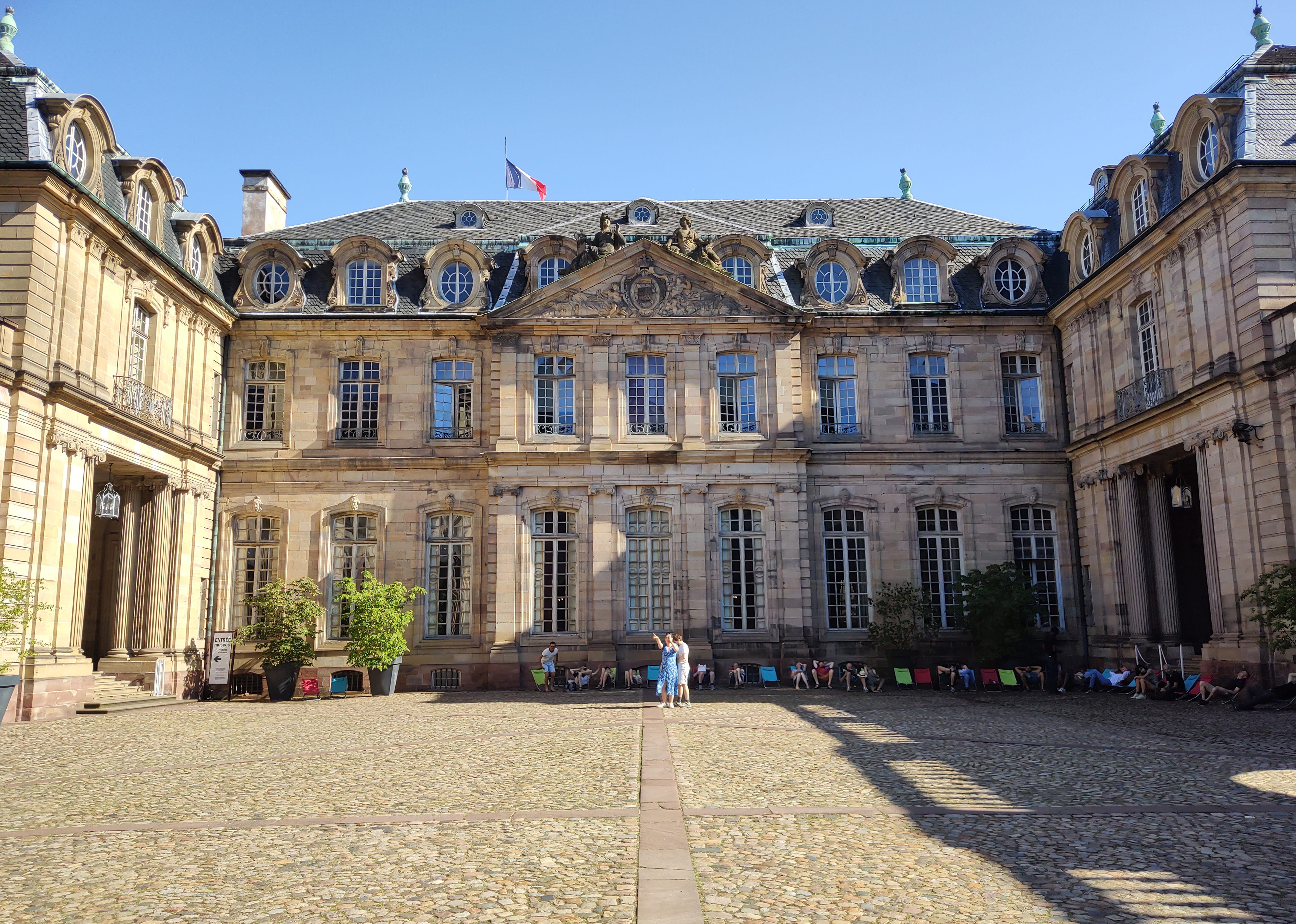
One of my frustrations with architecture is that architects, even today, often work in the shadows. In museums, paintings are typically accompanied by a plaque displaying the name of the artist, but buildings rarely credit their creators in this manner. I’m surprised by how many historical structures have an “unknown” architect. This anonymity frustrates me: modern architects can create unsightly buildings without public accountability (unless one does some research), while various brilliant historical architects have gone unrecognized for their masterpieces.
When we think of a culture’s “iconicity”, architecture often takes center stage. Perhaps I’m biased, but for me, “New York” conjures images of the Empire State Building alongside yellow cabs, with Broadway and Wall Street as secondary thoughts. For Paris, it’s the Eiffel Tower of the Louvre; for Amsterdam, canal houses. The visual elements of a place, its architectural landmarks, are the most striking and recognizable. These aesthetics have etched themselves into the minds of billions and dominate our cultural landscape. Yet, unlike the creators of great symphonies or paintings, the architects behind these iconic structures remain largely invisible and anonymous.
Some might argue that architecture, unlike music, is only partly an art form due to its functional role. This could explain why it doesn’t resonate as strongly with the public, with architects often viewed more as engineers than artists. I disagree though, as pre-war architecture showcased remarkable artistry and craftsmanship on top of its practical purpose. It’s also possible that the decline and degradation in architectural quality after World War I has led the public to overlook this artistic field. Still, this doesn’t fully account for the widespread ignorance of historically renowned architects.
I’m struck by the general public’s lack of interest in historic architecture. Even middle-class boomers, who love strolling through historic European towns, often lack a nuanced appreciation for it. In my experience, their enjoyment is akin to attending an orchestra performance without being able to distinguish a violin from a clarinet. They appreciate historic architecture but rarely notice its subtleties, often failing to tell a baroque building from a renaissance one. I’ve heard them mislabel buildings as castles when they’re really not, for example. Their enjoyment seems atmospheric and casual, but not particularly profound. This is fine, but it underscores how architecture remains elusive to the average person, for reasons that aren’t entirely clear to me.
Architecture lacks a prominent place in our culture. I’m unaware of many podcasts or YouTube channels dedicated to it (though some may exist). I’ve considered creating content myself but I’m wary of what I call “the wall of disinterest”. Humanity’s architectural marvels rank among its greatest achievements. Some are so awe-inspiring, an alien-origin theory wouldn’t even surprise me (isn’t there a theory about this?). Well, it would, but still. Nevertheless, architecture rarely takes center stage in our cultural spotlight.
For a time, my computer wallpaper was the Paleis op de Dam, arguably the most famous building in the Netherlands. I’m not particularly fond of the building, but it somehow ended up as my background. Someone I know saw this background image, but didn’t recognize the building, which I found a bit shocking. This again emphasizes how little the average person actually engages with our architectural heritage, even failing to identify the most iconic landmark in the country. I could show family members photos of charming 19th-century buildings just around the corner from their homes, and I doubt they’d recognize them. I’m not angry, just disappointed.
Another way in which architecture strikes me as peculiar is its vulnerability to subversion, groupthink, and conformity. In the Netherlands, buildings from the 1930s or 1950s overwhelmingly adhere to a single dominant style, with little deviation. This trend holds for pre-19th-century architecture as well, where structures across the country consistently reflect an aesthetically Dutch character and little else. Even today, traditional or classical architecture is rare, though certain (mediocre) neo-traditional styles are slowly gaining traction.
In contrast, music exhibits far greater diversity. The explanation seems obvious: music is accessible to the masses, while few people design their own homes, let alone other (public) buildings and neighborhoods. Architecture remains controlled by a small, elite group, which makes it less democratic and less responsive to public desires. The accessibility and democratization of music help it resist subversion; it must resonate with listeners to succeed. White noise or atonal music will not gain traction, but the architectural equivalent persists because people have to simply put up with it. This is not to the say that there isn’t crap music out there. But I don’t think it’s true that no good music is being produced. Even the “crap” music you hear on the radio often still possesses some semblance of relatability.
Architecture, I’d argue, has been uniquely battered by subversion and oikophobia. The field seems to attract a certain type. Perhaps it is the stereotype of the pretentious artist, but more miserable and without the flair. My sense is that many in the industry excel more at management, bureaucracy, planning, or social and environmental concerns than at actual design and creativity. There seems to be an explicit lack of joie de vivre and instead a commitment to making “bold statements”.
Architecture also seems riddled with contradictions I struggle to reconcile. For example, while the quality and charm of building exteriors have sharply declined, interiors often receive more consideration (though they’re not without flaws). Restaurants illustrate this: their exteriors may resemble concrete bunkers or might in other ways be totally uninspiring, but their interiors reflect considerable effort.
I’ve noticed that interior decoration tends to interest women more than men. If true, the prioritization of interiors over exteriors aligns with a broader societal shift toward feminine sensibilities or virtues. I just wish we didn’t favor one at the expense of the other.
Modernity often dismisses ornamentation as frivolous or nonfunctional. Yet, aesthetics clearly matter in many areas: restaurant interiors, product packaging, event posters, Christmas decorations, fashion, car designs, and more. Even starkly modernist buildings frequently make bold visual “statements” which could be seen as equally pointless and unnecessary. But that doesn’t count, somehow.
Returning to lack of public engagement with architecture: discontent with post-war architecture is quite widespread but seems to lack the fierce urgency of, say, climate change activism. Instead, it feels muted, resigned: “Yeah, it’s ugly, but what can you do?” We passionately defend the natural world but seem indifferent to the self-inflicted ugliness of our built environment. This isn’t a priority for most.
Ultimately, architecture occupies an odd place in society. Most people don’t seem to care much about it. I’m not saying they should, but I can’t fully grasp why architecture, unlike other art forms, fails to capture the same embrace.
It's incredible what boorish architecture is going up in and around Utrecht these days. The only interesting thing happening is probably Wonderwoods by Italian architect Stefano Boeri. The new city hall building is great, but then they built the hideous "World Trade Center" right next to it and blocked the facade. I think people don't take any interest in it because of the lack of education surrounding architecture / architectural history. People just allow the city planners to run things without question, which is sad.
Best book (booklet? Screed?) about why modern architecture is ugly: from Bauhaus to our house by Tom Wolfe.
Probably best to first read his similar treatment of modern art (the painted word).
And modern? That was 55 years ago.