
Artistic Slop

The word "slop" gets thrown around a lot these days. I’m not entirely sure what it means. It seems to suggest something one dislikes, perhaps with a sense of “cheapness” attached to it. It could also refer to something pleasant, yet lacking discipline or effort in its creation. In this post, I want to defend what I’ll call “artistic slop”, though I’m not sure if what I’m referring to truly fits that label.
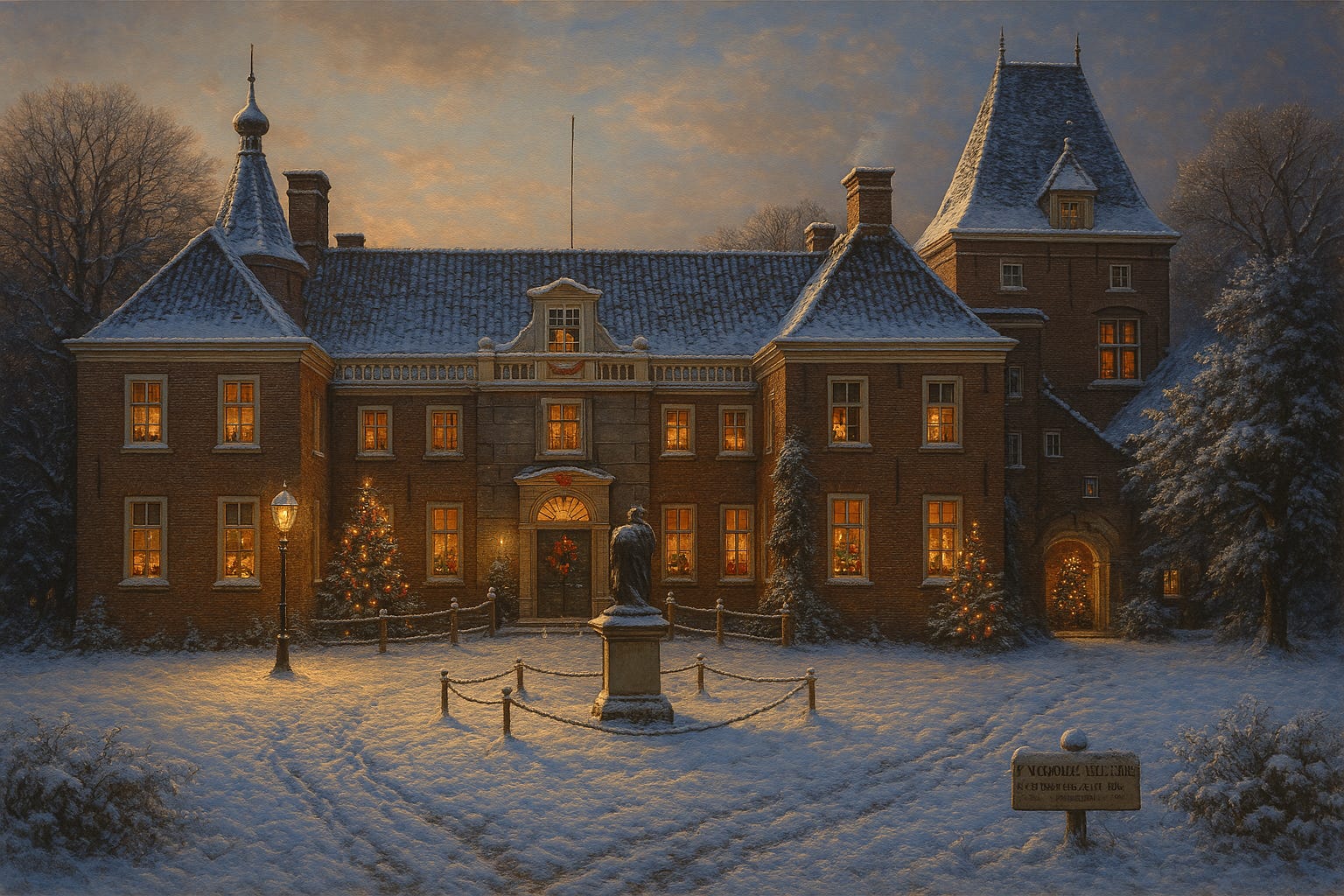
I might come across a painting of a nostalgic scene, like a streetscape, a rural landscape, or a pastoral view (like the picture above). My first instinct is to like it. Then I catch myself wondering what others might think of my seemingly unrefined and parochial taste. I suppose, like most people, I’m somewhat sensitive to that kind of judgment.
Quite a few people believe artistic expression should be challenging and demanding. I think this attitude stems primarily from a desire to appreciate the unappreciable, in an attempt to override one’s natural instincts and to maximize one’s free will, which will lead intellectual, moral, and spiritual elevation. It then can be used as a signal to peers and as a source of self-satisfaction. The point is to impress other and to be impressed by oneself. Such a desire is incredibly strong.
This type of perspective makes people suspicious of anything that feels intuitively nice or wholesome. I suspect this is the reason why the progressive are often rather hostile to stable, thriving societies, as if prosperity itself is unsettling, in need of ever more toil. I also wonder if modern architecture’s ugliness comes from an unspoken agreement that “niceness” is inherently wrong, if not sinful. After all, do we pay a price for being in the presence of grand and graceful buildings? Not really. Do we deserve to stand in their shadow? No, we do not.
I don’t share this revolutionary restlessness. I’m not bothered by things being nice. But I also suspect I might be shallow in some respects. After all, I enjoy the Hangover movies, being the peasant that I am. I feel like the appreciation for things that are nice in an uncomplicated way signals a degree of shallowness, somehow. Many people seem to rather put their brain to work, carving ever new neural pathways with the goal of justifying the undesirable, offensive and indefensible. The ugly is a tool for many to intellectually elevate themselves. The nice offers no such opportunities. I guess, in some ways, some people enjoy art for its own sake, while others enjoy art for what it can provide them in a social context.
That said, there’s definitely slop out there. Take Thomas Kinkade’s paintings. Based on what I’ve seen of his work, I find them to be too colorful, too idealized, too cluttered, and almost sickeningly sweet. I’ve also never cared for clichéd fantasy scenes, like fairytale castles, rainbows, waterfalls, leprechauns, or elves. Similarly, I’ve never liked sci-fi scenes with enormous, gleaming skyscrapers, neon lights and thousands of flying cars. I prefer art with at least some grounding in reality.
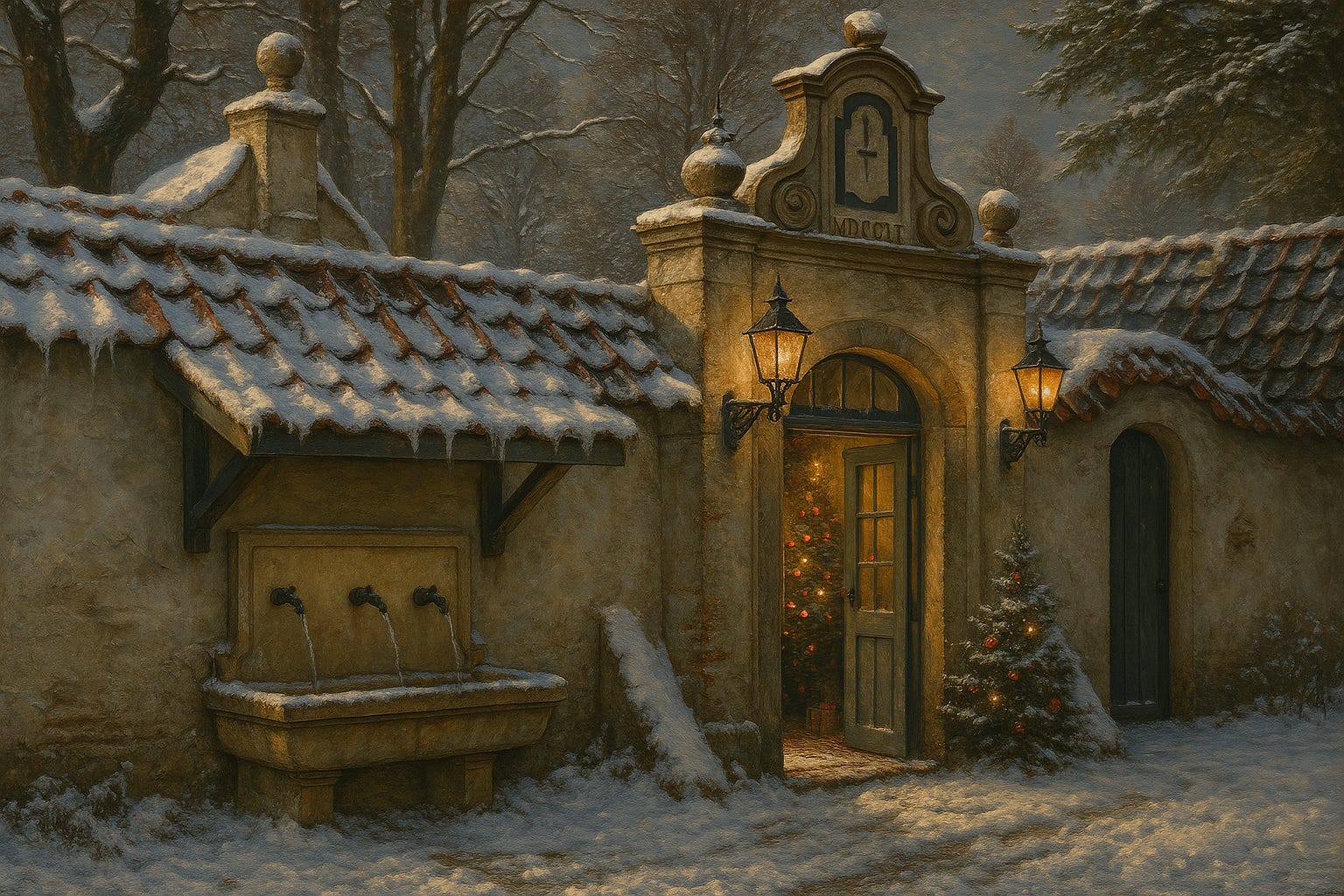
The two AI-generated images above complicate things further. I find them incredibly charming, if I’m being completely honest. They do lack a soul, as they are without the touch of the human hand, but I can’t help being drawn to them. They manage to capture an impressive degree of coziness and nostalgia I’m unable to resist.
I’m not sure why I appreciate these pictures, but not Kinkade’s work. In many ways, they feel more balanced and rooted (probably because they are interpretations of existing buildings and scenes). I think nostalgia and romanticism are fine drivers of art, but they require some measure of restraint. Kinkade’s paintings overflow with so much nostalgia and color that they become alienating and unrelatable. I enjoy color, but not in excess. I like seeing nice things, but not too many at once. My brain can only handle so much vividness.
My broader point is that, beyond charming paintings of serene scenes, there's little else to find. We persist in this futile quest to uncover beauty in unexpected places, as if to challenge the universe itself. I have no interest in such a pursuit, as it is doomed to fail. After a century, I find it odd that many still dismiss conventional, simple beauty with such disdain, as if this rebellion is anything novel or impressive.
A joke needs to be funny. An intentionally unfunny joke might be an interesting intellectual exercise, but is also completely pointless. Because there’s nothing outside of a funny joke. There are no other types of jokes. Similarly, we can twist ourselves into knots avoiding what’s conventionally nice, but it’s a dead end. There’s nothing beyond niceness. And why would anyone object to it anyway? It’s not as if our world is drowning in it.